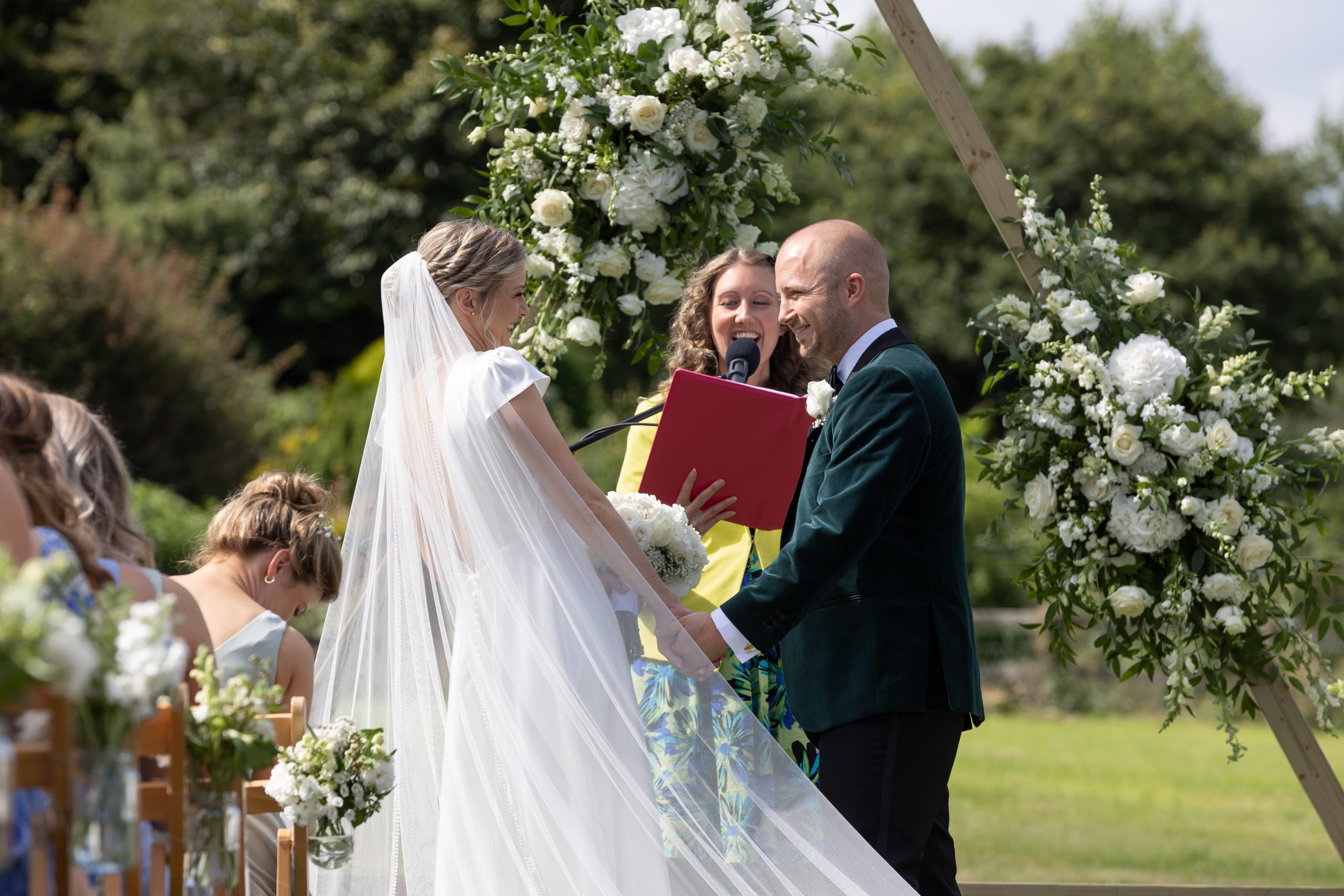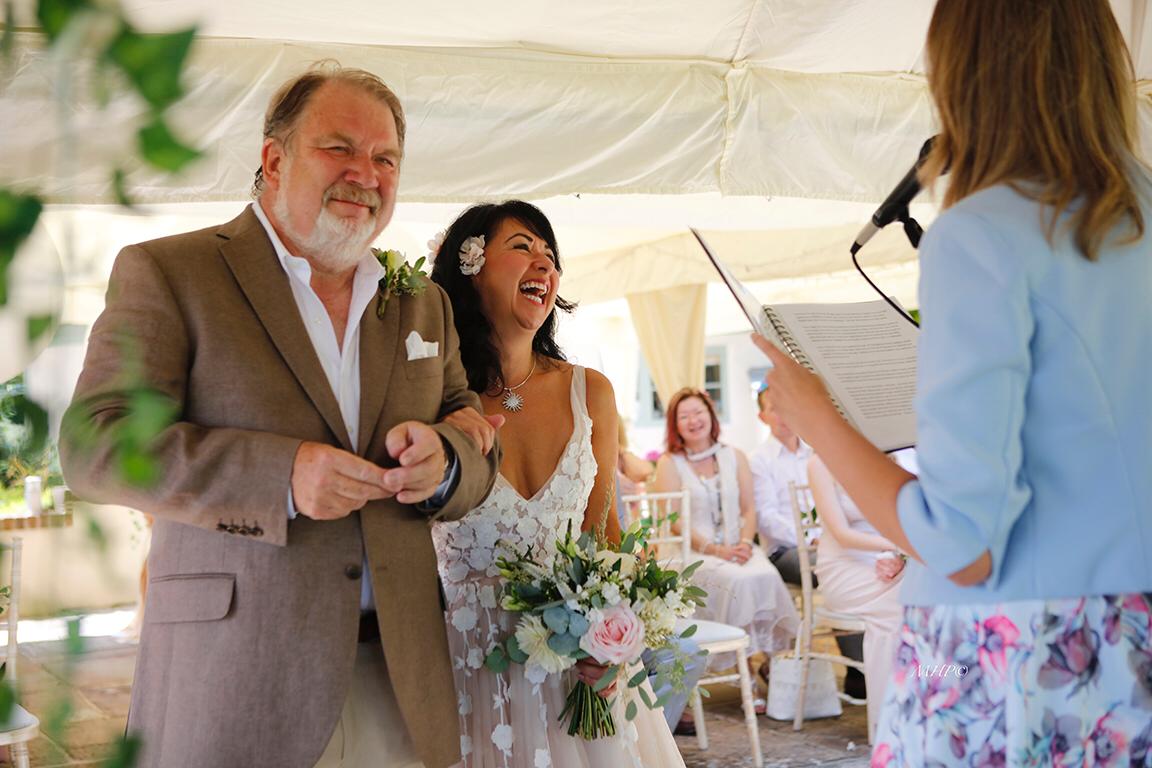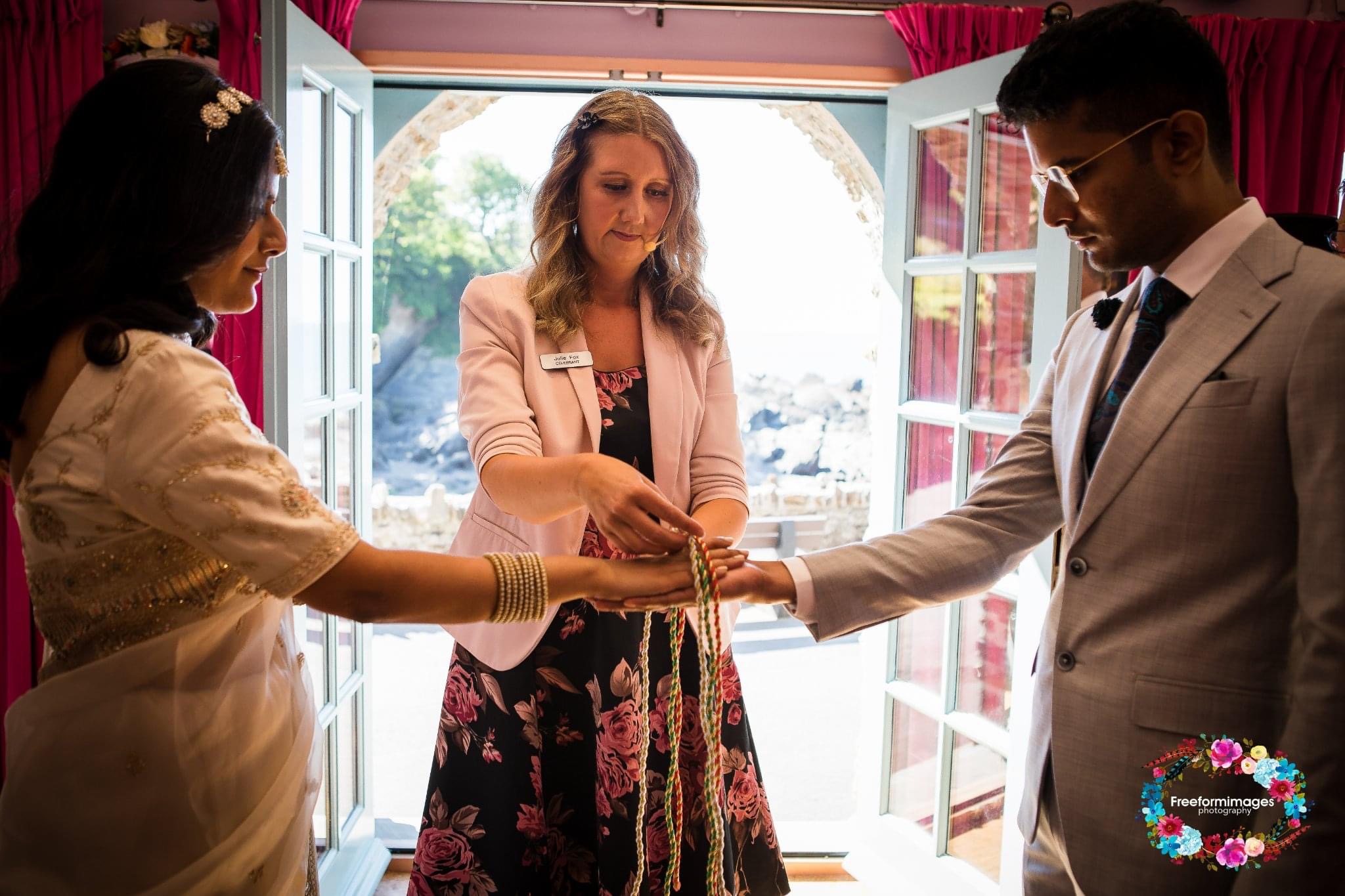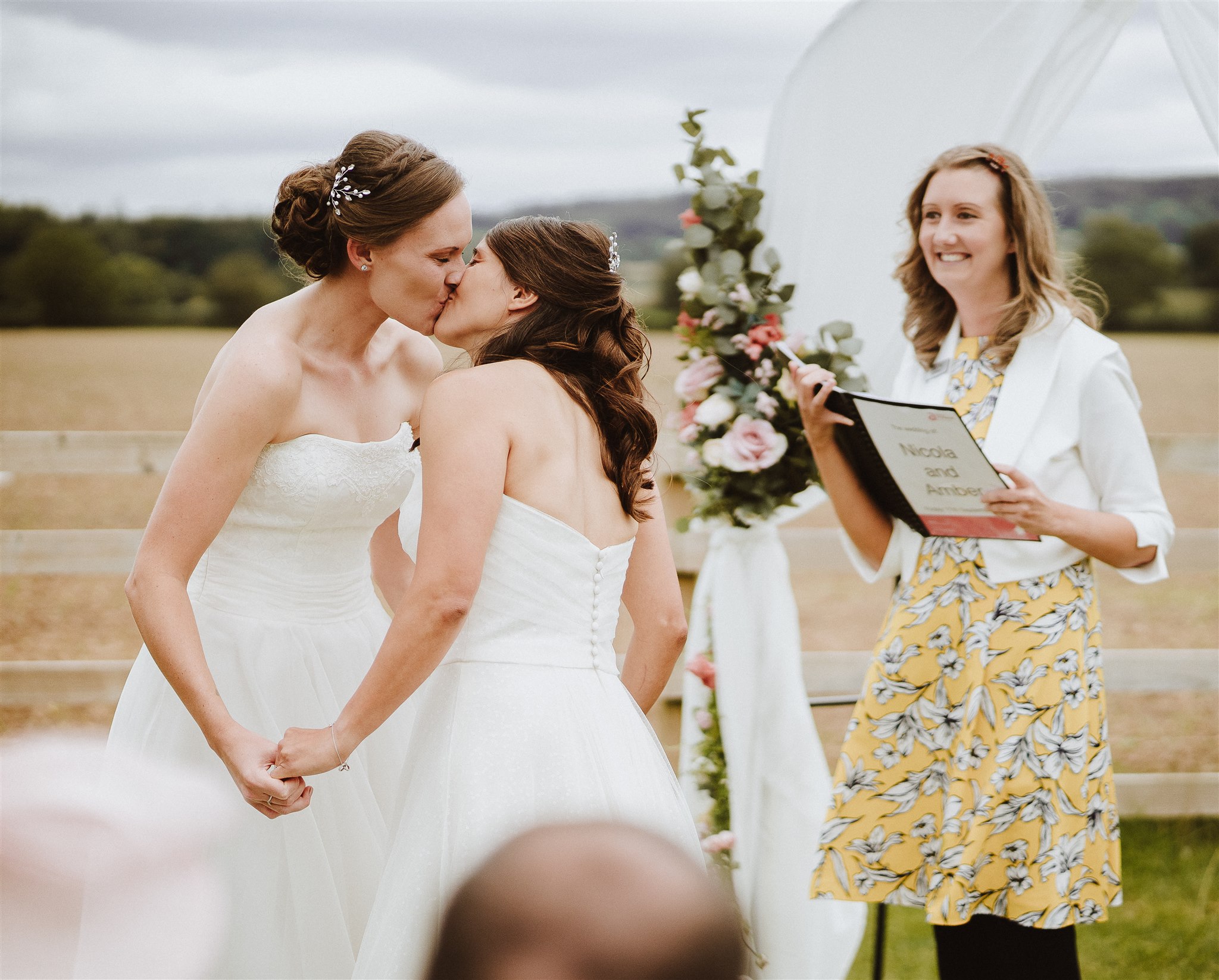

Let’s talk about the bit nobody gets particularly excited about.
The legal bit.
If you’re planning a wedding with a celebrant, you may have come across the slightly confusing fact that a celebrant ceremony isn’t, by itself, what makes you legally married in England and Wales.
So here’s how it actually works – without drowning you in legal jargon.
What do you need to be legally married?
For a civil marriage in England and Wales, you need to have the legal ceremony at either:
- a register office, or
- a venue that has been approved for civil ceremonies.
A registrar must conduct or be present at the civil ceremony, and you need at least two witnesses.
You also need to give notice of your intention to marry before the ceremony. This is a legal declaration made at your local register office. You normally need to give notice at least 29 days before the ceremony, and the marriage must take place within 12 months of giving notice. There are different rules in some circumstances, particularly if one of you is from outside the UK.
The important thing is to sort the legal requirements out separately from the fun stuff – and don’t leave them until the last minute.
What actually happens during the legal ceremony?
There are certain legal words and declarations that have to be included.
You’ll also need to exchange vows as part of a civil marriage ceremony.
You and your two witnesses will sign the marriage schedule, along with the registrar. The signed schedule is then returned to the register office, where the marriage is entered into the electronic register. You can then obtain your marriage certificate.
Civil ceremonies can include readings, songs, music and personal vows, but they must be non-religious. Religious content such as hymns or readings from the Bible or Torah isn’t permitted in a civil ceremony.
Exactly how much personalisation you can have depends on the type of ceremony and where it’s taking place.
For example, Devon’s statutory ceremonies at County Hall cannot be personalised – no readings, music or personal vows – whereas other ceremony options allow more flexibility. They’re the basic legal ceremony, held in a small ceremony room with just the couple and two witnesses, so if you’d like photos, one of your witnesses will need to take them.
Does the legal ceremony have to be the main event?
This is where things get interesting.
You don’t have to make the legal ceremony the centrepiece of your wedding day.
You could have a small legal ceremony at a register office with just your two witnesses, then have your proper wedding celebration a few days later with everyone you love.
Your celebrant ceremony can then include all the things that make your wedding feel like your wedding.
The legal ceremony and the celebrant ceremony can be two completely separate experiences.
What does the legal bit cost in Devon?
There are a few separate costs to factor in. Giving notice of your intention to marry currently costs £46.50 per person in Devon, so £93 for a couple if you’re both British citizens. If either of you is not a British citizen, the current fee is £63 per person. You also pay a separate fee for the legal ceremony itself. In Devon, a ceremony at an approved wedding venue currently costs £575 Monday to Friday, £600 on a Saturday, or £675 on a Sunday or bank holiday. Register office ceremonies have different fees, with the simplest statutory ceremony (two witnesses only) currently costing £62.
| Devon fee (2026/27) | Cost |
|---|---|
| Giving notice, if you’re both British citizens | £46.50 per person (£93 for a couple) |
| Giving notice, if either of you is not a British citizen | £63 per person |
| Ceremony at an approved wedding venue, Monday to Friday | £575 |
| Ceremony at an approved wedding venue, Saturday | £600 |
| Ceremony at an approved wedding venue, Sunday or bank holiday | £675 |
| Statutory register office ceremony (two witnesses only) | £62 |
So if you’re planning to have the legal ceremony separately and then have your celebrant-led wedding, you’ll need to budget for the legal costs as well as your celebrant and venue. These are Devon’s 2026/27 fees. They usually rise each April, so it’s always worth checking the current Devon Registration Service charges when you book.
Can you legally get married outdoors?
This is one of those questions where the answer is slightly more complicated than people expect.
A celebrant ceremony can take place outdoors, subject to the rules and permissions applying to the location.
And since the law changed in 2022, legal civil marriages can also take place outdoors at approved premises, provided the outdoor area is covered by the venue’s approval and the relevant requirements are met.
So if your venue has an approved outdoor area, you may be able to have the legal ceremony outside with a registrar.
But that’s different from simply choosing any beach, garden, field or other outdoor location and having a wedding there.
If you’ve always dreamed of getting married somewhere that isn’t an approved civil ceremony venue, you can still have the outdoor ceremony you’ve imagined with a celebrant. You would simply need to deal with the legal marriage separately.
It’s also worth checking the specific rules for your chosen location. You’ll need to check who owns or manages the location and whether you need permission for your gathering, particularly if you’re planning things such as structures, amplified music, alcohol, catering or exclusive use.
What if my venue is already licensed for weddings?
A venue being licensed for civil ceremonies doesn’t mean you have to have a registrar-led ceremony there. You can absolutely have a celebrant-led wedding at a licensed wedding venue. That’s exactly what I did at Glebe Barn. You simply need to decide how you want to deal with the legal bit. My advice is to keep the two things separate: have your legal ceremony at a register office beforehand, then have your celebrant-led wedding at your chosen venue on your wedding day. That way, your wedding ceremony isn’t squeezed around a registrar’s timetable and you can make the day entirely about celebrating with your family and friends.
Do I need a registrar and a celebrant?
If you want your celebrant to conduct your main wedding ceremony but you also want to be legally married, you will need to arrange the legal formalities separately.
Some couples have the legal ceremony immediately before their wedding day.
Some do it weeks or months beforehand.
Some do it on the same day, with the legal ceremony kept small and the celebrant ceremony becoming the main event. I don’t recommend this – it’s just too stressful!
But there isn’t one right way to do it.
As long as you’ve dealt with the legal requirements, the rest is up to you.
Can my celebrant legally marry me?
An independent celebrant who isn’t legally authorised to conduct marriages cannot perform the legal marriage ceremony in England and Wales.
That’s why I always explain the difference clearly.
I’m there to create and conduct your ceremony.
A registrar is there to conduct the legal marriage.
If you choose to do the legal bit separately, that doesn’t make your wedding ceremony any less real.
In fact, it can give you the freedom to spend your wedding day doing exactly what you want – with the people you love, in a place that means something to you, with a ceremony that sounds like you.
Which, after all, is what a wedding should be about.
Not sure whether you need a celebrant, a registrar or both? Read my guide: Celebrant or Registrar?