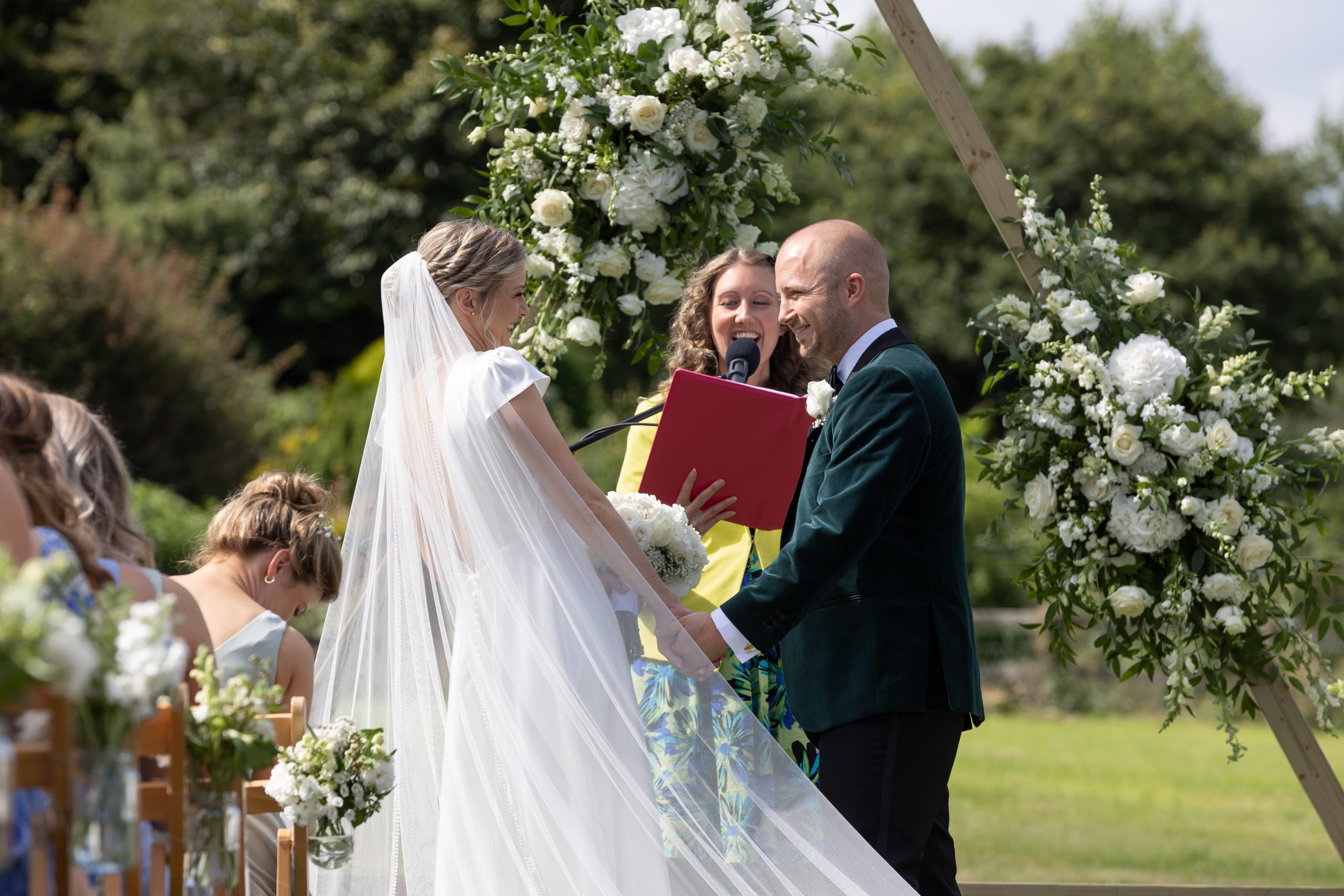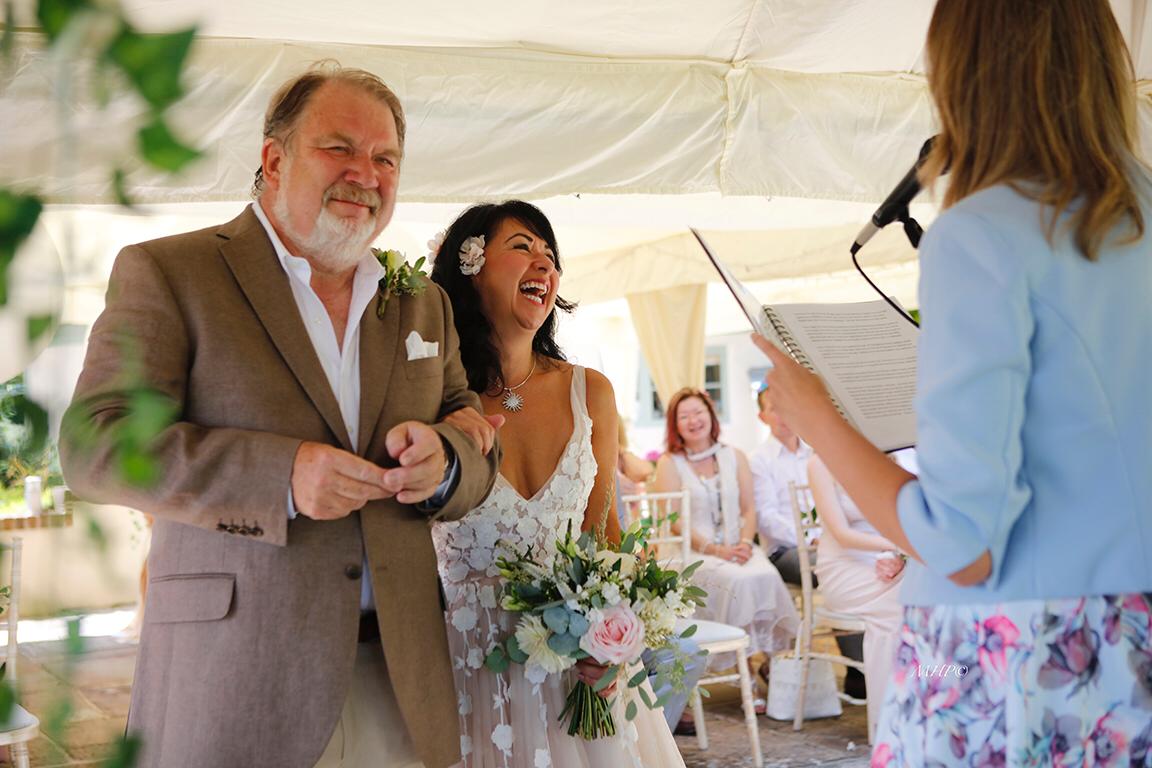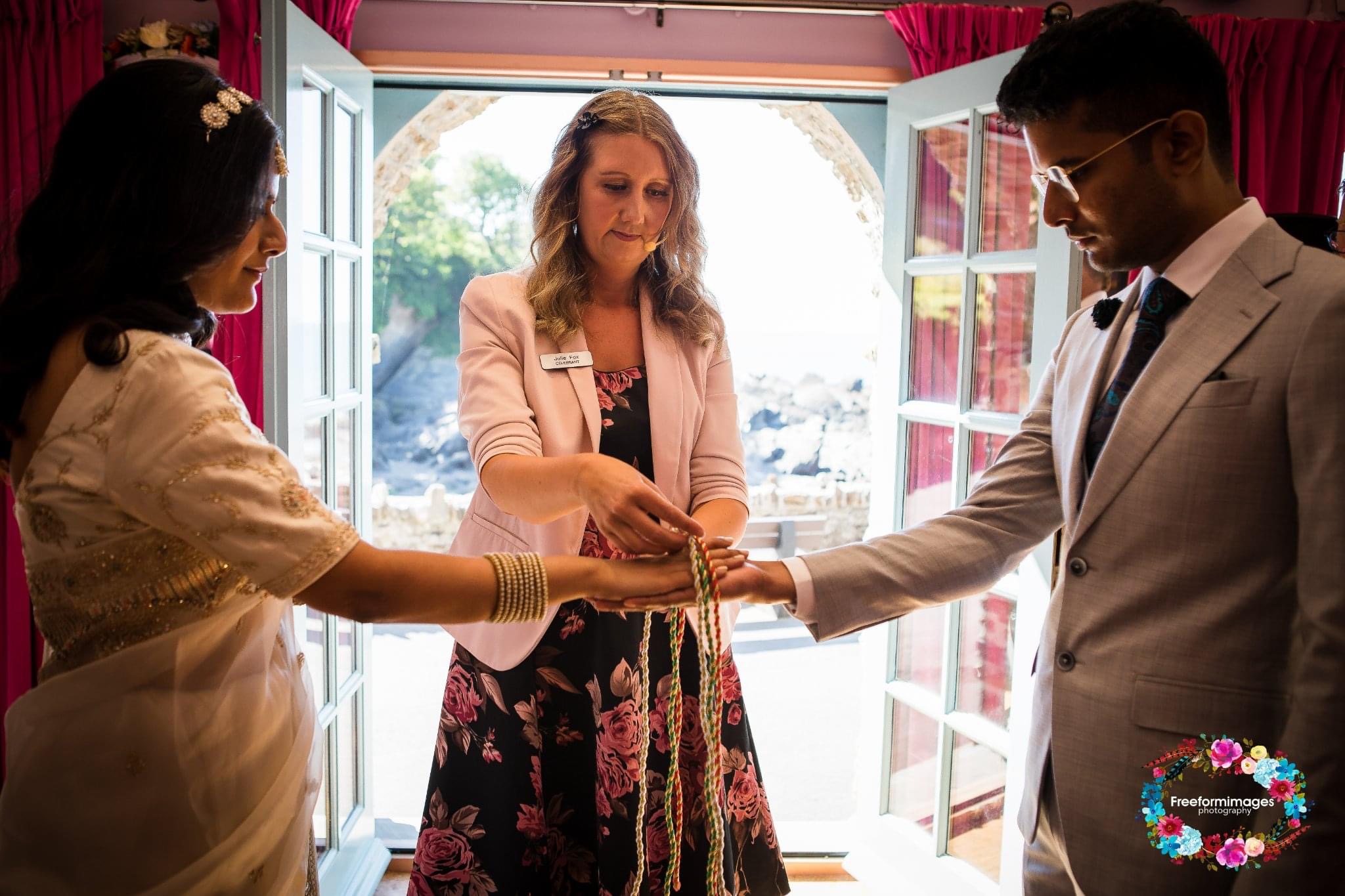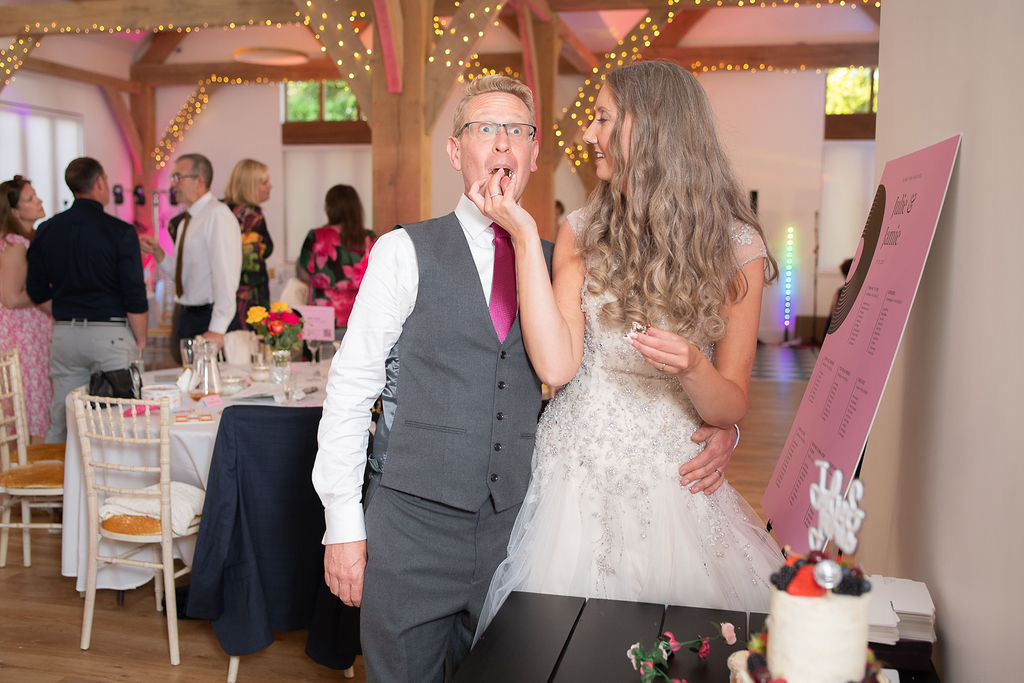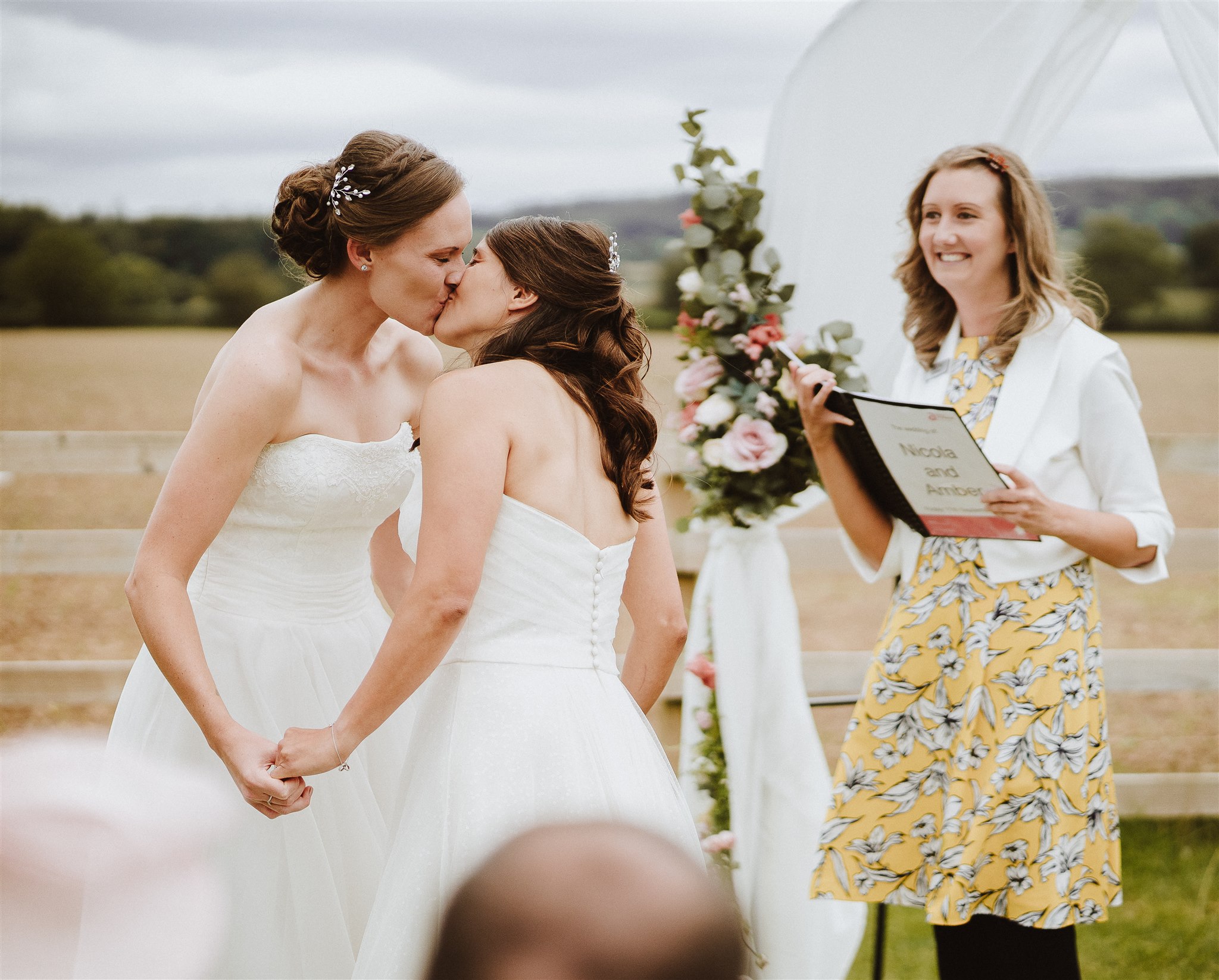
At the moment, I can create and conduct a wedding ceremony that is completely personal to you – in a barn, a garden, a beach, a private home, a field or pretty much anywhere else where the necessary permissions are in place.
But there is one thing I can’t currently do.
I can’t legally marry you.
In England and Wales, an independent celebrant like me isn’t legally authorised to conduct the marriage itself. If you want your marriage to be legally recognised, you still need to complete the legal formalities with a registrar or another person who is legally authorised to conduct marriages.
That is why some couples have a small legal ceremony separately and then have their main wedding ceremony with a celebrant.
And that’s also why I am watching the current wedding law reform very closely.
Because, for the first time, there is a real possibility that this could change.
So, what’s actually happening?
2022
The Law Commission carried out a major review of weddings law and published its recommendations in 2022. One of its main recommendations was to move away from a system based largely on the building where you get married, towards one based on the person responsible for conducting the ceremony.
October 2025
In October 2025, the Government announced its intention to reform weddings law when parliamentary time allowed.
July 2026
Then, in July 2026, the Ministry of Justice launched a formal consultation: Tying the Knot: Reforming Weddings Law in England and Wales.
24 September 2026
The consultation closed on 24 September 2026.
What could change?
The proposed reforms would give couples much more choice about where they get married and who conducts their wedding.
That could eventually mean legally recognised weddings in places such as private homes, gardens, beaches and other locations that aren’t currently approved for civil ceremonies – subject to the necessary safeguards and permissions.
It could also mean independent celebrants like me being authorised to conduct the legal marriage itself.
That’s the really exciting bit.
What happens next?
The Government will consider the responses and decide how to take the proposals forward. If it proceeds, legislation will need to be introduced to Parliament and go through the usual parliamentary process before it can become law.
And even after legislation is passed, there will be work to put the new system into practice, including the detailed rules around authorisation, training, monitoring and accountability.
So, unfortunately, I can’t tell you that independent celebrants will be legally marrying couples next year – or even give you a definite date.
It isn’t law yet.
But it is now a formal Government proposal rather than simply an idea being discussed.
Why this matters to me
I became a celebrant because I believe a wedding ceremony should be about the people getting married – not simply about the building they’re standing in or the religion they favour. I’ve conducted ceremonies in all sorts of wonderful places and with all sorts of rituals.
I believe celebrants should be able to conduct legally binding weddings.
I’m trained, qualified and insured. I’ve been doing this since 2017 and I’m a professional celebrant – I take the responsibility of conducting a wedding very seriously.
Marriage is a significant commitment, and if celebrants are given the legal responsibility of conducting marriages, I believe they should be properly trained, authorised, insured and accountable.
That’s not something I’d ever take lightly.
That’s why this reform matters.
Not because registrars don’t have an important role – they absolutely do.
Not because there shouldn’t be rules – there should.
And not because every couple will want a celebrant – they won’t.
But because I think couples should have a genuine choice about who conducts their wedding, where they get married and what their ceremony looks like, while still having the safeguards that come with a legally recognised marriage.
The current proposals are a step towards that.
And I’ll be watching very closely to see what happens next.
What about registrars?
This isn’t about getting rid of registrars.
Registrars have an important role and would continue to have one.
The point is choice.
Some couples will want a registrar. Some will want a religious ceremony. Some will want an independent celebrant.
The proposed reforms could simply mean that couples have more freedom to choose the person conducting their wedding, rather than having their options determined primarily by the type of building they’re standing in.
There would still be rules
If independent celebrants are eventually allowed to conduct legally binding weddings, there would need to be proper safeguards.
The proposals include considerations around training, suitability, legal duties, monitoring, accountability and conflicts of interest.
And quite right too.
Being responsible for someone’s legal marriage is a serious job.
So, can I legally marry you yet?
Not yet.
If you’re getting married now, you’ll still need to deal with the legal marriage through the existing system.
But things are moving.
If the reforms eventually become law, it could mean that the person who gets to know you, creates your ceremony, tells your story and stands beside you on the day could also be the person legally responsible for marrying you.
That’s the system I’d like to see.
Not a system without rules.
Not a system without safeguards.
But a system where couples have a genuine choice.
Who marries you.
Where you get married.
And what your wedding ceremony looks like.
That’s what wedding law reform could eventually make possible. And I’ll be watching closely as it develops.